
Currency Exchange at ATM vs. Real Rates

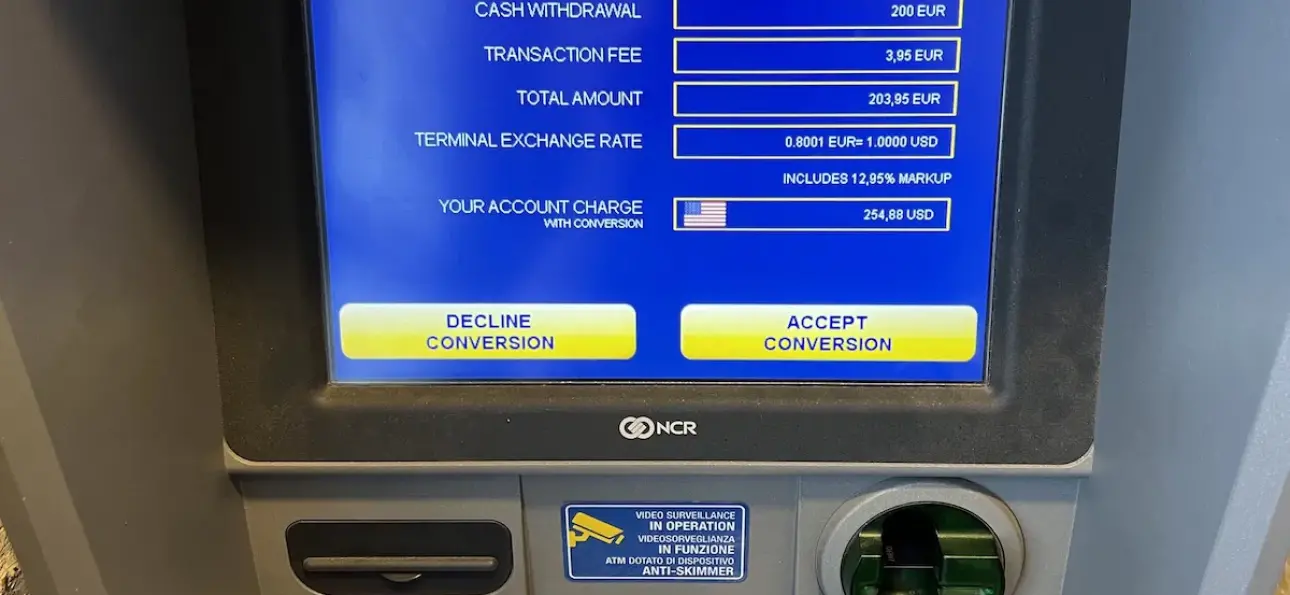


Table of contents [Show]
- Why ATMs Feel Like the Easy Choice
- The Hidden Cost of ATM Currency Exchange
- Why Banks Aren’t Much Better Than ATMs
- The Third Option Most People Miss in Toronto
- How Professional Currency Exchanges Set Rates
- Why Taheri Exchange Offers Better Value
- When ATMs Might Still Make Sense
- How to Choose the Right Currency Exchange Near You
- FAQs
- Final Thoughts
If you Google currency exchange near me, you’ll see dozens of options. ATMs. Banks. Airport kiosks. Exchange offices. On the surface, they all promise the same thing—convert your USD to CAD quickly. But convenience often hides a cost. And most people only realize it after the money is gone.
ATMs feel safe because they’re familiar. Banks feel official. But when it comes to foreign exchange in Toronto, both can quietly take more than you expect. This guide breaks down what happens when you exchange USD to CAD at an ATM, why banks aren’t optimal, and how a trusted third-party exchange like Taheri Exchange protects your value.
Why ATMs Feel Like the Easy Choice
ATMs win because they remove friction. You already have a card, trust the machine, and don’t need to talk to anyone. For travelers and locals alike, that simplicity feels comforting.
But here’s the problem. ATMs are designed for withdrawals, not fair currency exchange. The moment your USD is converted to CAD, multiple systems take a cut. You don’t see it. You don’t approve it. You just accept the final number on the screen.
That silent acceptance is where most people lose money.
The Hidden Cost of ATM Currency Exchange
Dynamic Currency Conversion Explained
Most ATMs apply dynamic currency conversion. Instead of letting your home bank handle the exchange, the ATM operator converts the money for you at a marked-up rate. It’s framed as helpful. In reality, it’s expensive.
According to the Bank of Canada, dynamic conversion often adds a markup of 3% to 10% above the real exchange rate. That’s not a service fee. That’s baked into the rate itself.
ATM Fees You Don’t See Upfront
On top of the poor rate, ATMs may charge:
• A local ATM usage fee
• A foreign network fee
• A processing fee from your bank
These fees don’t always appear clearly. Sometimes they show up days later, on your statement.
Bank Exchange Rates Aren’t Neutral Either
Even if your bank handles the conversion, retail banks rarely offer competitive currency exchange rates. They prioritize margin, not fairness. Consumer finance experts on CBC Marketplace have repeatedly shown that banks exchange currency at rates worse than specialized exchanges.
Why Banks Aren’t Much Better Than ATMs
Banks feel safe. But safety doesn’t equal value.
Most Canadian banks:
• Offer poor retail exchange rates
• Add service or handling fees
• Require waiting periods
• Limit available foreign currencies
For small or medium exchanges, banks are often the least cost-effective option. They’re built for volume and compliance, not individual fairness.
The Third Option Most People Miss in Toronto
This is where licensed currency exchanges come in.
A registered currency exchange operates under strict Canadian regulations as a licensed money service business. Unlike ATMs and banks, their entire model is built around foreign exchange—not side profits.
They make money on transparent margins, not hidden conversion tricks.
How Professional Currency Exchanges Set Rates
A trusted exchange uses:
• Real-time market rates
• Clear spreads you can ask about
• No forced conversion prompts
• No bundled fees
You see the rate before you exchange. You understand math. You make the decision.
That clarity is what most people are looking for when they search money exchange near me.
Why Taheri Exchange Offers Better Value
Taheri Exchange operates as a trusted foreign exchange in Toronto, not a machine and not a bank counter. You walk in. You talk to a human. You see the rate. You ask questions without pressure.
There are:
• No hidden fees
• No under-the-table cutting
• No rushed decisions
• No confusing receipts
This matters, especially for newcomers, travelers, and anyone exchanging meaningful amounts.
As former banker and consumer advocate Gail Vaz-Oxlade has stated publicly, “The biggest losses in currency exchange come from not understanding the rate you’re being given.” Transparency fixes that.
When ATMs Might Still Make Sense
To be fair, ATMs aren’t evil. They’re useful in emergencies. If you need a small amount of cash at midnight, an ATM may be the only option.
But for planned exchanges, travel preparation, or larger amounts, convenience becomes expensive. That’s where most regret comes from.
How to Choose the Right Currency Exchange Near You
Before you exchange, ask:
• Is this business registered?
• Are the exchange rates shown clearly?
• Can someone explain the rate in plain language?
• Are there any additional fees?
• Is this their core service or a side offering?
A professional exchange will answer calmly and clearly.
FAQs
1. Is it better to exchange USD to CAD at an ATM?
Usually no. ATMs often use marked-up rates and hidden fees.
2. Are ATM exchange rates worse than currency exchanges?
In most cases, yes. Specialized exchanges offer better value.
3. Is Taheri Exchange legit in Toronto?
Yes. Taheri Exchange operates as a licensed, regulated exchange.
4. What is the safest way to exchange money near me?
Use a registered currency exchange with transparent rates.
5. Do currency exchanges charge hidden fees?
Reputable exchanges do not. Always ask before exchanging.
Final Thoughts
When you search currency exchange near me, you’re not just looking for speed. You’re looking for confidence. ATMs and banks trade on familiarity, but familiarity can be expensive. A trusted local exchange gives you clarity, control, and peace of mind.
If you want real rates, real explanations, and real value, choosing a professional currency exchange in Toronto isn’t just smarter. It’s calmer.
That’s the difference.